Explore Settaya for a streetscape shaped by sake, miso and soy sauce, where Meiji- and Taisho-era buildings remain in active use. Consider a street walk focused on this continuing brewing heritage, rather than making an indoor visit the centre of your plans.
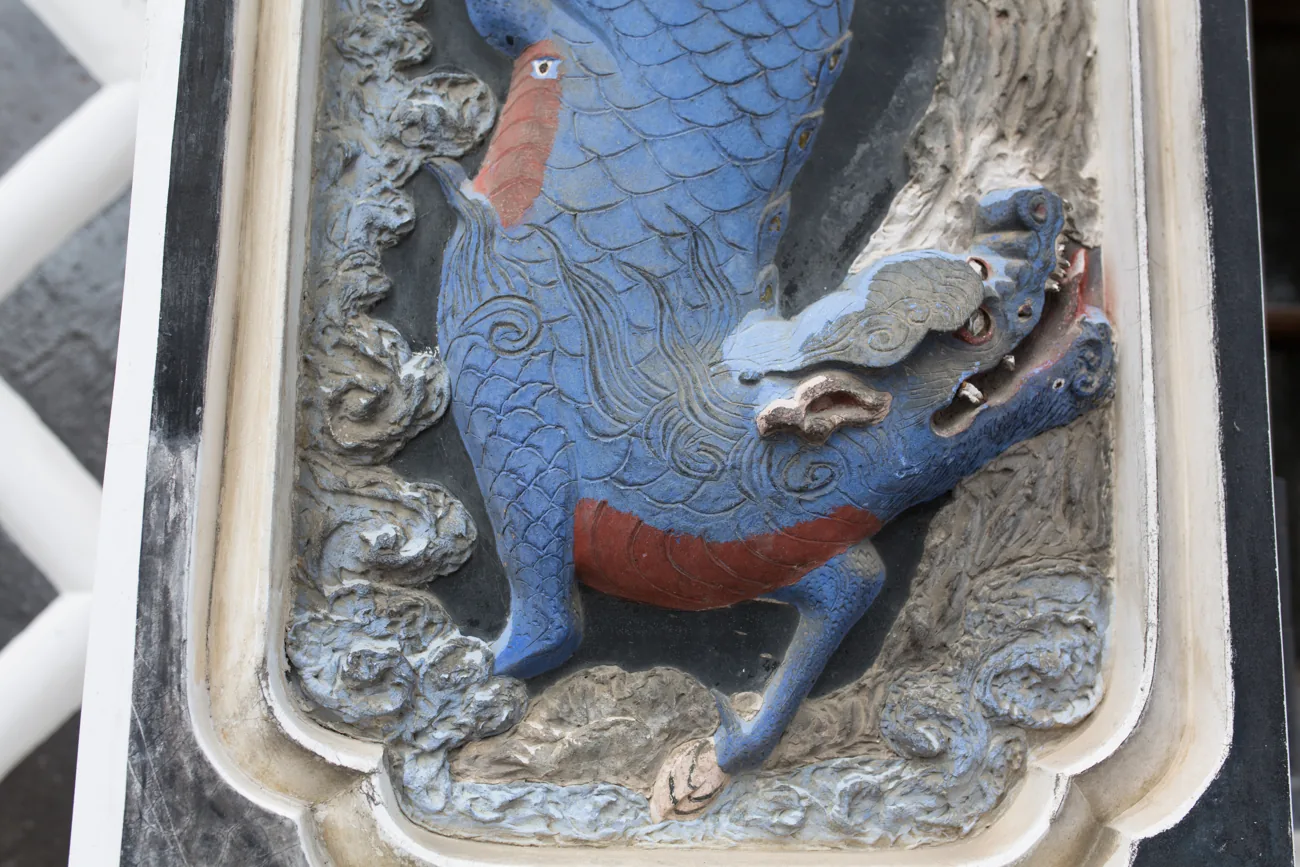
Featured image: A colourful kote-e plaster relief at the former Kina Saffron Winery in Settaya. Photo: Norio NAKAYAMA / Wikimedia Commons, CC BY-SA 2.0. Photographed 24 February 2014; resized and converted to WebP.
Why visit
Settaya and neighbouring Miyauchi preserve a brewing district where sake, miso and soy sauce are still made. The appeal is not simply a collection of old buildings: warehouses and other structures from the Meiji and Taisho eras remain in use, with some adapted as shops or museums. That combination gives the district a particular focus for travelers interested in both food culture and historic architecture. Try looking at the buildings as part of a continuing industry, rather than only as reminders of the past.
Plan your visit
Use the old Mikuni road and the Jizo waymarker as subjects for your walk, rather than treating the district solely as a list of businesses to enter. For names to orient your reading, the official local guide introduces Hoshino Honten, Hasegawa Shuzo, Koshi no Murasaki and Yoshinogawa. Consider choosing a few names to learn about beforehand, while leaving your street walk open-ended; this is not a prescribed route between them.
Make the most of your visit
Try giving equal attention to the district’s three strands of production: sake, miso and soy sauce. This offers a broader perspective than approaching Settaya only through sake. As you explore, consider how the surviving warehouses and buildings connect the area’s architectural heritage with its present-day uses. The contrast between continuing production and buildings adapted as shops or museums is a useful theme for your visit.
Planning notes
The official local guide was checked on 20 October 2026. Individual breweries, museums and shops have different opening days and entry arrangements, so check the particular facility before planning an indoor visit. Public-street sightseeing does not grant access to working production areas: keep a walk through the district distinct from any separately confirmed facility visit.
Practical information
Highlights
Highlights: Settaya and neighbouring Miyauchi preserve a brewing district where sake, miso and soy sauce are still made. Meiji- and Taisho-era warehouses and buildings remain in active use, with some adapted as shops or museums.
Information as of .
Highlights
Highlights: The old Mikuni road and a Jizo waymarker are features of the streetscape. The official local guide introduces breweries including Hoshino Honten, Hasegawa Shuzo, Koshi no Murasaki and Yoshinogawa.
Information as of .
Access
Planning notes: Individual brewery, museum and shop opening days and entry arrangements differ. Public-street sightseeing does not grant access to working production areas. Check individual facilities before planning an indoor visit.
Information as of .
For another side of Miyauchi’s food culture, read our guide to Aoshima Shokudo and Nagaoka ginger soy-sauce ramen.
Useful links
Settaya and Miyauchi walking guide
Information based on checks dated 2026-10-20.